Introduction
Most people think “full coverage car insurance” means everything is covered. That’s wrong.
There is no official policy called “full coverage.” It’s just a combination of coverages that protect both you and others. If you misunderstand this, you either overpay or stay underprotected.
This guide breaks it down clearly. No confusion. No fluff. Just what you need to know to make a smart decision.
What Is Full Coverage Car Insurance?
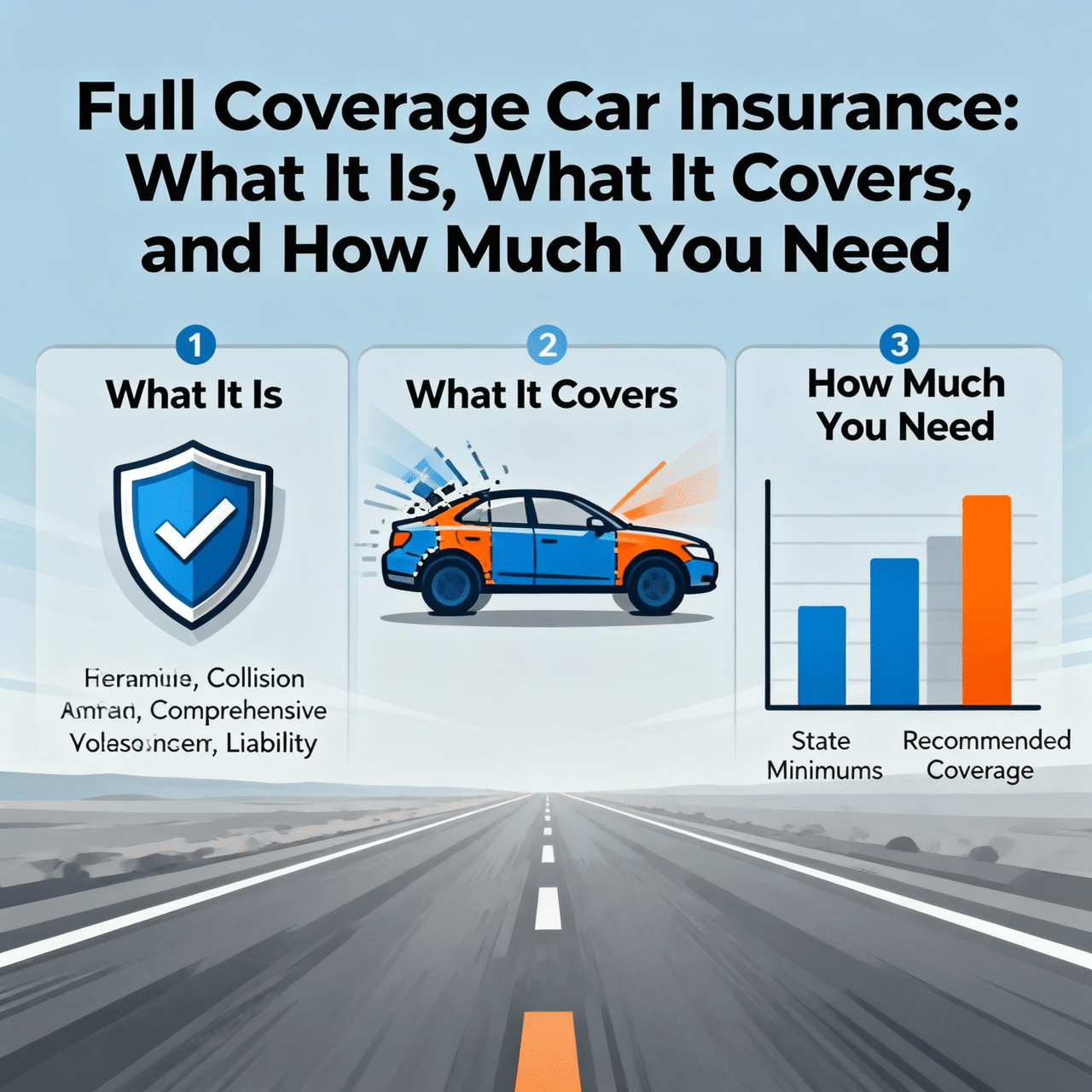
Full coverage car insurance usually includes:
- Liability insurance
- Collision coverage
- Comprehensive coverage
That’s it. Not magic. Not unlimited protection.
Simple Breakdown:
- Liability → Pays for damage you cause to others
- Collision → Pays for your car after an accident
- Comprehensive → Covers theft, fire, natural disasters
What Does Full Coverage Car Insurance Actually Cover?
Let’s go deeper so you don’t stay confused.
1. Liability Insurance
This covers:
- Other people’s medical bills
- Property damage
- Legal costs
It does NOT cover:
- Your injuries
- Your car
2. Collision Coverage
This covers:
- Damage to your car after an accident
- Whether it’s your fault or not
3. Comprehensive Coverage
This covers things outside accidents:
- Theft
- Fire
- Floods
- Vandalism
- Falling objects
What Full Coverage Does NOT Cover
This is where people get burned.
Full coverage does NOT include:
- Mechanical breakdowns
- Wear and tear
- Personal belongings inside the car
- Rideshare use (in many cases)
Why Full Coverage Matters
Let’s be direct.
If you don’t have full coverage:
- You pay for your own car repairs
- You lose money if your car is stolen
- You take full financial risk
Reality Check:
One accident can cost thousands. One theft can wipe out your car’s value.
Who Should Get Full Coverage?
Not everyone needs it. Use logic.
You SHOULD get full coverage if:
- Your car is new or expensive
- You have a loan or lease
- You can’t afford to replace your car
You can SKIP it if:
- Your car is very old
- The car value is low
- You can afford to replace it easily
How Much Does Full Coverage Car Insurance Cost?
Cost depends on multiple factors:
- Age
- Driving record
- Location
- Car type
- Credit score (in the USA)
Average Cost in the USA:
- Around $1,500 to $2,500 per year
How Much Coverage Do You Actually Need?
Most people choose the minimum to save money. That’s a mistake.
Recommended Liability Limits:
- At least 100/300/100
Deductibles:
- $500 to $1,000 is common
Smart Rule:
Choose coverage based on:
- Your income
- Your assets
- Your risk tolerance
Full Coverage vs Liability-Only Insurance
This is where decisions happen.
| Feature | Full Coverage | Liability Only |
|---|---|---|
| Covers your car | Yes | No |
| Covers others | Yes | Yes |
| Theft protection | Yes | No |
| Cost | Higher | Lower |
Brutal Truth:
- Liability-only is cheaper
- But one accident = you pay everything
👉 Full coverage = higher cost, lower risk
👉 Liability only = lower cost, higher risk
When Should You Drop Full Coverage?
Don’t keep paying forever without thinking.
Drop it when:
- Your car value is very low
- Insurance cost is higher than car value
- You can afford replacement
Example:
If your car is worth $2,000 and insurance costs $1,500/year
👉 That’s a bad deal
How to Lower Full Coverage Costs
Stop overpaying. Use strategy.
1. Increase Deductible
Higher deductible = lower premium
2. Bundle Policies
Combine home + auto
3. Maintain Clean Driving Record
No tickets = lower rates
4. Shop Around
Never stick with one insurer blindly
👉 Loyalty doesn’t save money. Comparison does.
Common Mistakes to Avoid
1. Thinking “full coverage” means everything
It doesn’t.
2. Choosing minimum liability limits
Risky and short-sighted.
3. Ignoring deductibles
Low deductible = high premium.
4. Not reviewing policy yearly
Prices change. You should too.
How to Choose the Best Full Coverage Policy
Here’s a simple decision process:
Step 1:
Decide your coverage limits
Step 2:
Compare at least 3 insurance providers
Step 3:
Check:
- Claim process
- Customer reviews
- Coverage details
Step 4:
Pick value, not just price
Final Recommendation
If you want a safe approach:
- Always include liability, collision, and comprehensive
- Avoid minimum liability limits
- Adjust coverage based on your car value
- Review your policy every year
Conclusion
Full coverage car insurance is not complicated. People make it complicated.
- It protects your car
- It protects your finances
- It reduces risk
But only if you understand what you’re buying.
If you ignore the details, you’ll either overpay or stay exposed. Both are bad decisions.
FAQs
What is full coverage car insurance?
It’s a combination of liability, collision, and comprehensive coverage.
Is full coverage required by law?
No. Only liability is required in most places.
Is full coverage worth it?
Yes, if your car has value or you can’t afford repairs.
How much is full coverage insurance?
Usually between $1,500 and $2,500 per year in the USA.