
Full coverage insurance sounds simple. It is not. Most people assume it means “everything is covered.” That is wrong.
In 2026, full coverage auto insurance is still a combination of policies, not a single product. If you misunderstand this, you will overpay or stay underinsured.
This guide breaks it down clearly.
What Is Full Coverage Insurance?
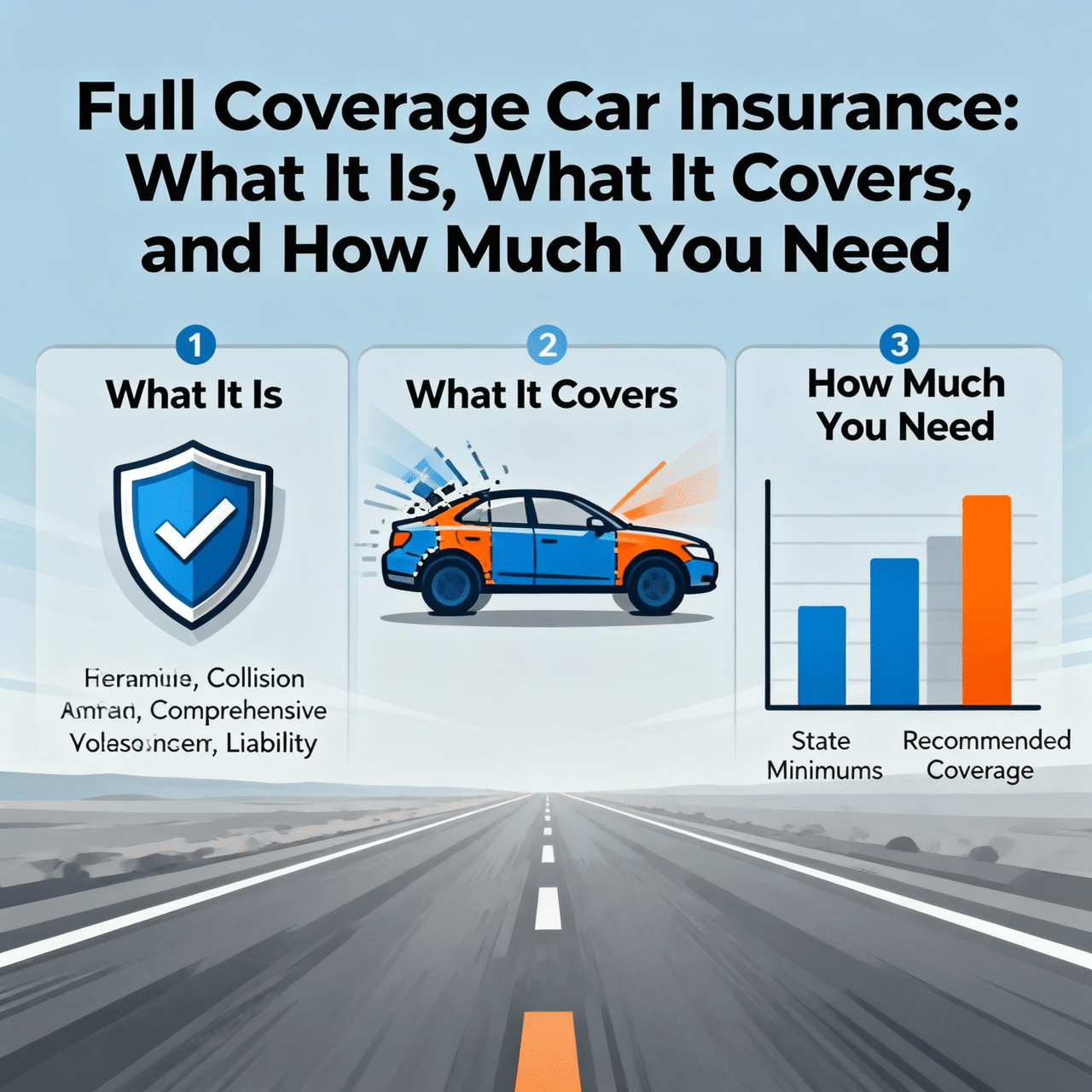
Full coverage insurance is a bundle of three main types of coverage:
- Liability insurance
- Collision insurance
- Comprehensive insurance
This is the standard definition across the USA.
What does full coverage auto insurance mean?
It means your policy covers:
- Damage you cause to others
- Damage to your own car from accidents
- Damage from non-accident events like theft or weather
That’s it. Not everything.
Full coverage insurance definition
Full coverage is not a legal term. It is a marketing term used by insurers. That alone should make you cautious.
What Does Full Coverage Auto Insurance Include?
1. Liability Coverage
This is mandatory in most states.
It covers:
- Injuries to other people
- Damage to other vehicles or property
It does not cover your own car.
2. Collision Coverage
This covers your vehicle when:
- You hit another car
- You hit an object
- Your car flips
It applies regardless of fault.
3. Comprehensive Coverage
This covers non-collision risks like:
- Theft
- Fire
- Natural disasters
- Vandalism
This is where many people get value, especially in high-risk areas.
What constitutes full coverage car insurance?
Technically:
- Liability + Collision + Comprehensive
Practically:
- You may need add-ons depending on risk
What Is Considered Full Coverage Auto Insurance in 2026?
Insurers still define it loosely. That’s the problem.
Minimum vs real full coverage
Minimum coverage:
- Only liability
- Cheapest option
- Highest financial risk
Full coverage:
- Adds protection for your own vehicle
But in 2026, many drivers also include:
- Uninsured motorist coverage
- Personal injury protection (PIP)
- Rental reimbursement
If you skip these, your “full coverage” is incomplete in real scenarios.
What Does Full Coverage Insurance NOT Cover?
This is where people make expensive mistakes.
Full coverage does NOT include:
- Mechanical breakdowns
- Regular maintenance
- Wear and tear
- Personal belongings inside the car
Why “full coverage” is misleading
Because it creates a false sense of security.
You are still exposed to:
- Deductibles
- Policy limits
- Exclusions
If you don’t read the fine print, you will lose money.
How Much Does Full Coverage Insurance Cost in 2026?
Average cost in the USA:
- $1,800 to $3,200 per year
But this varies heavily.
Factors that impact cost
- Age
- Driving history
- Location
- Vehicle type
- Credit score (in most states)
Reality check
If your premium is very cheap, your coverage is weak.
If it is very expensive, you may be overinsured.
Who Needs Full Coverage Insurance?
Not everyone.
You need it if:
- Your car is financed or leased
- Your car is new or high-value
- You cannot afford out-of-pocket repairs
You don’t need it if:
- Your car is old and low value
- Repair cost is close to car value
- You can replace the car yourself
Be logical. Not emotional.
How to Choose the Right Full Coverage Policy
Step 1: Assess your risk
Ask:
- Can I afford to replace my car?
- What risks are common in my area?
Step 2: Compare policies
Look at:
- Deductibles
- Coverage limits
- Exclusions
Do not just compare price.
Step 3: Add smart extras
Consider:
- Uninsured motorist coverage
- Roadside assistance
- Rental coverage
Only add what you actually need.
Step 4: Avoid common mistakes
- Blindly choosing “full coverage”
- Ignoring deductibles
- Not reviewing policy yearly
Is Full Coverage Insurance Worth It in 2026?
It depends.
Worth it if:
- You drive daily
- Your car has high value
- You face theft or accident risk
Not worth it if:
- Your car is worth less than your premium over time
Do the math. Most people don’t.
FAQs (PAA Optimized)
What is considered full coverage insurance?
Liability, collision, and comprehensive coverage combined.
What does full coverage auto insurance mean?
It means your car and others are protected in most accident and non-accident scenarios.
Is full coverage required by law?
No. Only liability is required in most states.
What constitutes full coverage car insurance?
A combination of liability, collision, and comprehensive policies.
Final Verdict
Full coverage insurance is not complete protection. It is just a layered policy.
If you treat it as “everything covered,” you will make bad financial decisions.
Understand the structure. Customize based on risk. Review yearly.
That is how you actually use insurance properly.